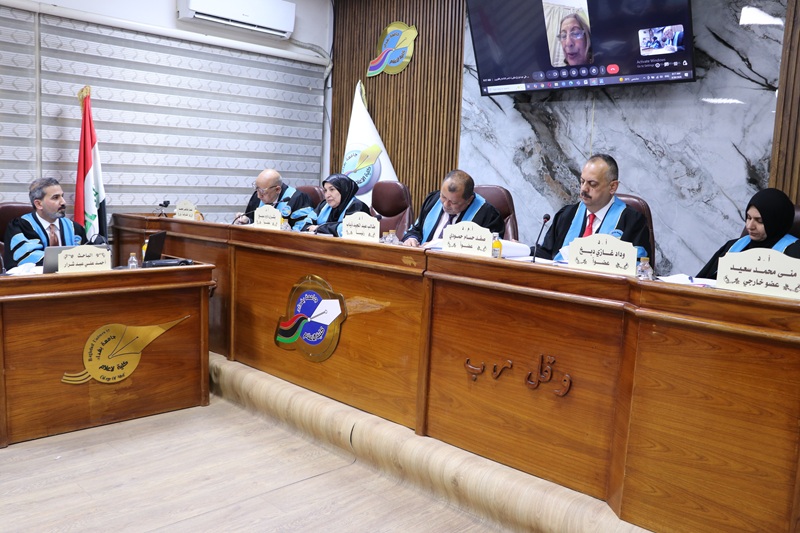
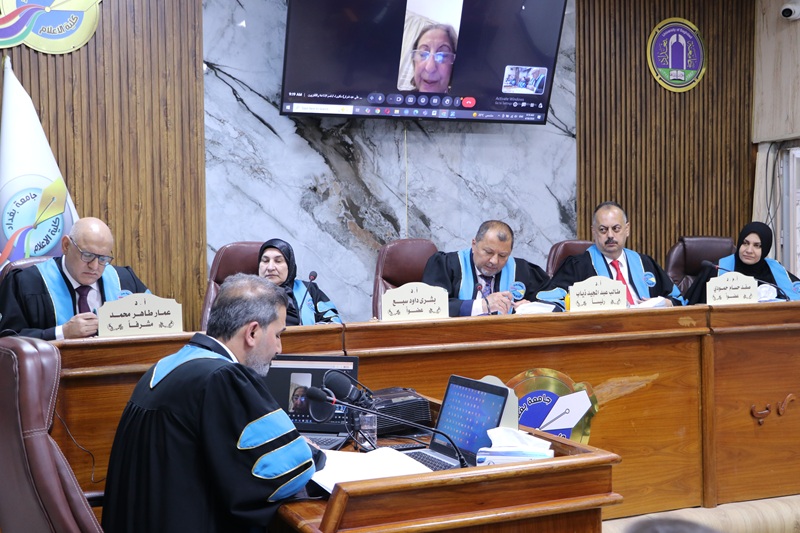
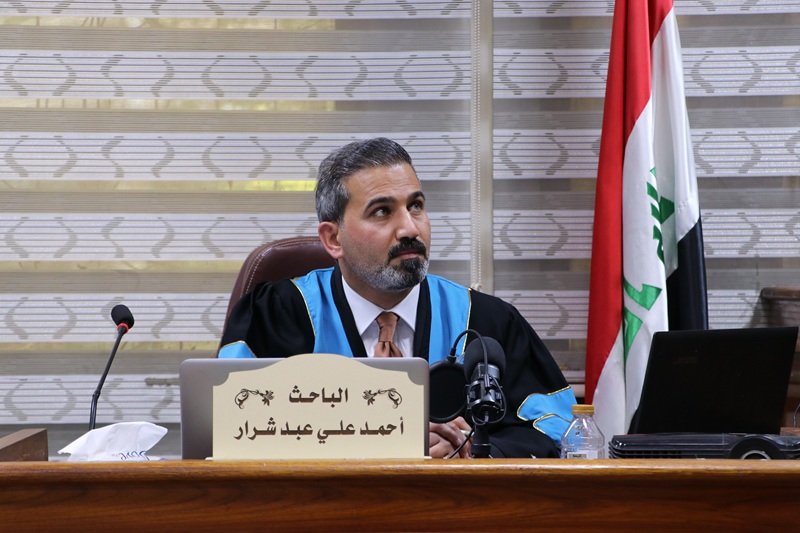
A PhD dissertation was discussed at the College of Mass Communication titled “Religious Appeals in Television Religious Programs and Their Relationship to Shaping Religious Beliefs Among Youth,” submitted by researcher Ahmed Ali Abdul Sharar.
The examination committee was chaired by Professor Dr. Talib Abdul Majeed Diab, with Professor Dr. Ammar Taher Mohammed as supervisor, and members including Professor Dr. Bushra Dawood Al-Sinjari, Professor Dr. Wadad Ghazi, Assistant Professor Safad Hossam Hamoudi, and external member Professor Dr. Mona Mohammed Saeed.
The study aimed to identify the most frequently used persuasive appeals and techniques in Islamic and Christian religious television programs, examine persuasive strategies and objectives targeted by these programs, and analyze the values and topics through which they encourage youth engagement and moral development.
The findings showed that both programs in the sample used rational and emotional appeals in a relatively balanced manner, reflecting a shared orientation regardless of religious affiliation. However, the program “Hayat Tayyiba” employed fear-based appeals more than “Bustan Al-Aqida.” The study also found that persuasive appeals influence both Muslim and Christian youth, with selective responses to sub-appeals within main categories, and a general preference among youth for fear-based over incentive-based messaging in religious television content.
The study recommended increasing the presence of religious programs on social media platforms by providing short clips and segmented content suitable for young audiences’ limited time. It also called for reconsidering the use of fear and incentive-based persuasion in religious television programming across both Islamic and Christian formats.
The findings align with the Sustainable Development Goals, particularly Goal 4 (Quality Education), through supporting academic research and knowledge development.