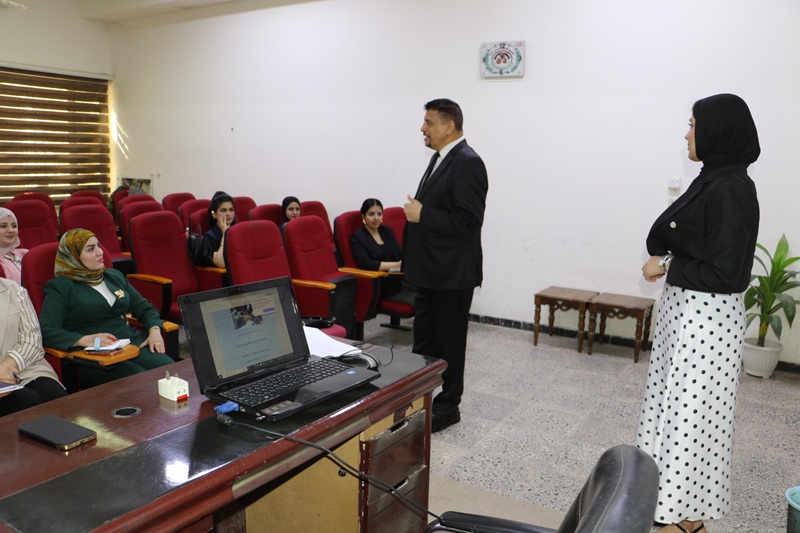
The Public Relations Department at the College of Mass Communication, University of Baghdad, organized an awareness campaign titled “The Illusion of the Perfect Face,” prepared by researcher Fatima Taha Al-Dulaimi under the supervision of Assistant Professor Kareem Misht Al-Mousawi, with the participation of master’s students. The campaign aimed to highlight the risks of excessive cosmetic procedures and their potential health, psychological, and social effects on young people.
The campaign was attended by Professor Jaafar Shaheed, Head of the Public Relations Department, who praised the academic efforts behind the initiative and stressed the importance of advancing research methodologies and translating the outcomes of academic studies into awareness campaigns implemented through scientific and systematic approaches to address contemporary social issues.
The campaign focused on the growing prevalence of cosmetic procedures in recent years, particularly amid the increasing influence of social media platforms on people’s perceptions of beauty and appearance. Some individuals have increasingly sought to alter their natural features, influenced by beauty standards that may be unrealistic or difficult to attain in everyday life.
The campaign emphasized that the issue does not lie in cosmetic procedures themselves, which may represent a personal choice or a medical necessity in some cases, but rather in excessive use and the persistent pursuit of perfection. Such behavior may lead some individuals to undergo repeated procedures without considering their potential health, psychological, or social consequences.
It also addressed the influence of edited images, filters, and similar beauty ideals widely promoted on social media. These trends may contribute to creating an unrealistic perception of beauty and lead some individuals to reject their natural appearance and develop a persistent desire to change their features.
The “Illusion of the Perfect Face” campaign reflects efforts to employ academic research and awareness communication to address issues related to appearance culture. It also seeks to raise young people’s awareness of the importance of maintaining a balanced approach to beauty standards and distinguishing between cosmetic procedures as a considered personal choice and an excessive preoccupation with appearance and the pursuit of unrealistic ideals.
The campaign aligns with the United Nations Sustainable Development Goals, particularly Goal 3: Good Health and Well-Being, by raising awareness of the potential health and psychological risks associated with ill-considered practices and behaviors related to cosmetic procedures.